
What Is WEEX TradFi? A Beginner’s Guide to Trading Global Assets with USDT


WEEX TradFi brings traditional financial markets into a crypto-native trading environment. Instead of opening a brokerage account, wiring funds through banks, or switching between multiple platforms, users can access global asset contracts with USDT inside the WEEX trading ecosystem.
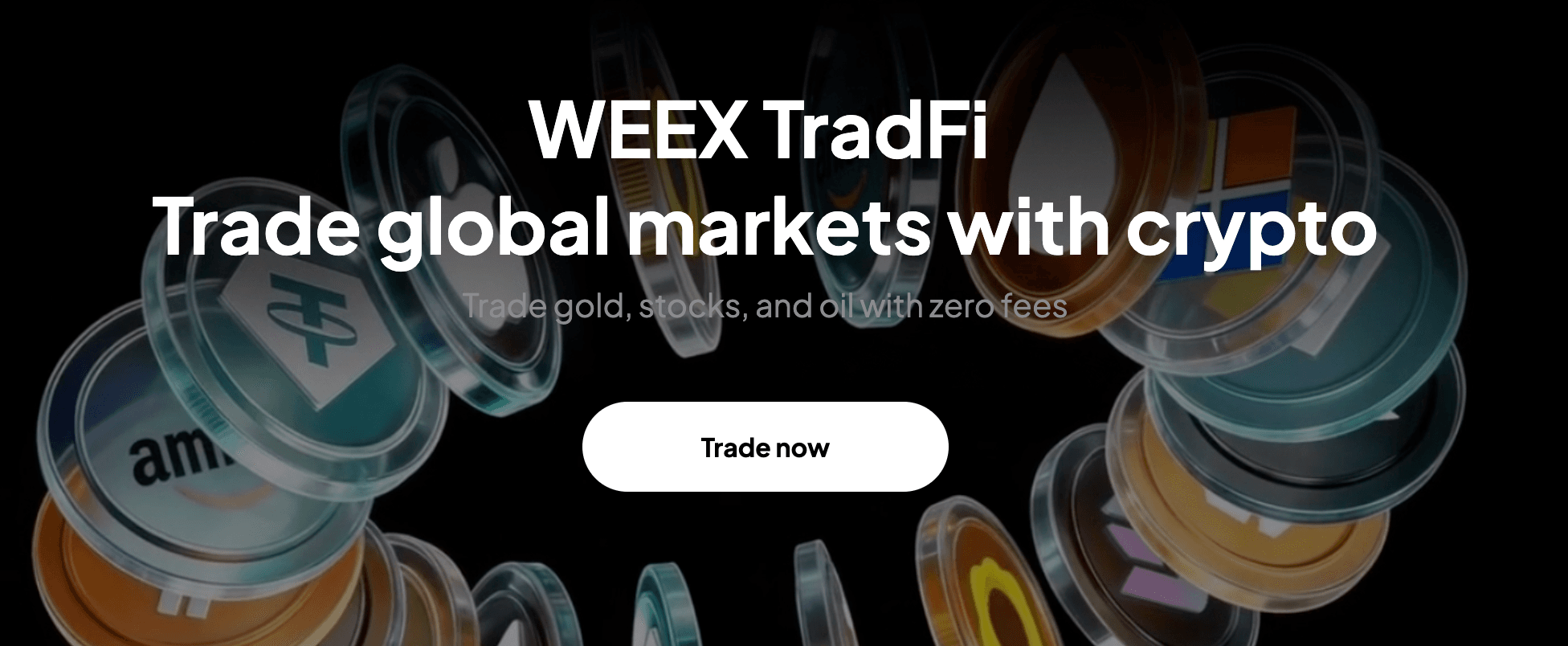
With WEEX TradFi, crypto traders can explore markets such as gold, silver, crude oil, commodities, indices, and selected stock-related products. The key idea is simple: use USDT as margin, trade traditional market price movements, and manage crypto and non-crypto opportunities from one account.
What Does TradFi Mean in Crypto?
TradFi stands for traditional finance. It usually refers to legacy financial markets such as stocks, commodities, forex, bonds, and indices. In crypto, TradFi means these traditional assets are made accessible through crypto-style products, often in the form of perpetual futures contracts.
This structure allows users to trade the price movement of traditional assets without using a conventional stockbroker. For example, a trader who already holds USDT can use it to access gold, oil, or global market exposure, depending on the products available on the platform.
Why WEEX TradFi Matters
The main benefit of WEEX TradFi is convenience. Crypto users are already familiar with USDT-margined trading, futures interfaces, order types, and margin management. WEEX applies that familiar workflow to traditional market exposure.
Instead of separating crypto trading and traditional asset trading into different platforms, WEEX TradFi gives users one unified path. A user can hold USDT, monitor crypto markets, and then shift part of their strategy toward gold, oil, commodities, or indices when market conditions change.
For new users, the first step is to register on WEEX, complete the required account setup, and prepare USDT for supported trading products.
How USDT Makes TradFi Trading Simpler
USDT acts as the bridge between crypto balances and traditional market exposure. Instead of converting funds into fiat currency or transferring money to a bank-linked broker, users can deposit or buy USDT and use it as margin for TradFi contracts.
If users do not already hold USDT, Quick Buy on WEEX provides a direct way to purchase crypto through supported payment methods before exploring TradFi products.
A basic trading flow may look like this:
- Create or log in to a WEEX account.
- Deposit or buy USDT.
- Enter the futures trading section.
- Select a supported TradFi product.
- Set margin, leverage, and order type.
- Manage the position through the WEEX trading interface.
What Assets Can Users Trade Through WEEX TradFi?
WEEX TradFi focuses on major traditional market categories. These may include precious metals, energy, commodities, indices, and selected stock-related products.
Gold and silver are often watched during inflation cycles or periods of market uncertainty. Oil can react to supply, demand, and geopolitical events. Stock and index products may reflect broader equity market sentiment. Commodities can help traders follow macro trends beyond crypto.
For example, users interested in gold-related exposure can review PAXG/USDT perpetual futures, depending on availability and regional eligibility.
What Makes WEEX TradFi Different from a Traditional Broker?
A traditional broker is usually built around fiat deposits, local market access, trading sessions, and separate settlement systems. WEEX TradFi is built for crypto users. It uses USDT as the core margin asset and keeps the trading experience close to crypto futures.
This lowers the learning curve for users who already understand crypto trading. They do not need to build a completely separate workflow for traditional markets. Instead, they can use familiar tools to access different asset classes.
Users who are active across the WEEX ecosystem can also monitor the WEEX Token price to stay updated on WXT-related market information.
Key Risks to Understand
WEEX TradFi products are trading products, not guaranteed investments. Futures and perpetual contracts involve leverage, liquidation risk, funding costs, fees, and market volatility.
Traditional assets can move sharply after economic data, earnings reports, interest rate decisions, geopolitical news, or liquidity changes. Even assets that appear more stable than some altcoins can become volatile under leveraged trading conditions.
Users should also remember that 24/7 platform access does not mean liquidity is always equal. During weekends, holidays, or periods when traditional markets are closed, liquidity conditions may differ from normal trading hours.
Conclusion
WEEX TradFi is designed for users who want traditional market exposure without leaving a crypto-native platform. By using USDT to trade assets such as gold, oil, commodities, stocks, and indices, WEEX gives traders a more flexible way to connect crypto capital with global market opportunities.
Before trading, users should review contract rules, leverage limits, fees, funding rates, and risk disclosures. TradFi access can expand a trading strategy, but disciplined risk management remains essential.
Disclaimer: This article is for informational purposes only and does not constitute financial advice. Trading digital assets, futures, and leveraged products involves significant risk and may result in loss of capital.
You may also like
Can I Trade Futures with $200? Beginner’s Guide on WEEX
Many newcomers to crypto wonder if starting futures trading with just $200 is realistic, especially when platforms promise…

Is $CHIP a Scam? Decoding the Crash and Pump Dump Red Flags
The $CHIP token has sparked heated debates in the crypto community, with its rapid price swings raising questions…

What is Hormuz Reserve Protocol (HRP) Coin
Hormuz Reserve Protocol (HRP) Coin is a unique geopolitical DeFi narrative token on the Solana blockchain that captures…
Where and How to Buy Hormuz Reserve Protocol (HRP) Coin
If you’re exploring the crypto space and curious about Hormuz Reserve Protocol (HRP) coin, this article guides you…
Is Hormuz Reserve Protocol (HRP) Coin a Good Investment in 2026?
As cryptocurrency markets evolve in 2026, investors are eyeing niche tokens like Hormuz Reserve Protocol (HRP) Coin, which…
Is $HRP a Scam? 859% Surge Raises Rug Pull Concerns
The recent 859% surge in $HRP, the Hormuz Reserve Protocol token, has sparked widespread debate among crypto enthusiasts,…
What is Scam Altman (SCAM) Coin: Everything You Need to Know
Scam Altman (SCAM) is a meme-inspired cryptocurrency that draws from Elon Musk’s public criticisms of OpenAI CEO Sam…
XRP vs XLM: Which Crypto Could Make You a Millionaire?
Many people wonder which crypto can make you a millionaire, especially when comparing established players like XRP and…
Bitcoin vs XRP: Why Choose XRP Over Bitcoin in 2026?
Bitcoin holds the crown in the crypto world with its massive market cap and status as digital gold,…
Are Cross-Chain Bridges Safe After the $292M Hack?
In April 2026, the crypto world watched as KelpDAO suffered a massive $292 million loss from a single…
Is GDER Crypto a 10x Opportunity or a Scam in 2026?
With GDER crypto making waves on Solana in 2026, traders are buzzing about its potential as a “digital…
What is Qualcomm Tokenized Stock (Ondo) (QCOMon) Coin? Comprehensive Guide for Crypto Enthusiasts
Qualcomm Tokenized Stock (Ondo) (QCOMon) is a tokenized asset that provides economic exposure to Qualcomm’s stock, allowing holders…
What is Pharos (PROS) Coin: Everything You Need to Know
Pharos (PROS) is a groundbreaking Layer 1 blockchain designed for RealFi, enabling real-world value and institutional-grade assets to…
What is chudhouse (CHUDHOUSE) Coin
Chudhouse (CHUDHOUSE) is a meme-inspired cryptocurrency that draws from internet culture, featuring an angry house image with a…
What is Gensyn (AI) Coin: Everything You Need to Know
Gensyn (AI) coin powers an innovative decentralized network designed for machine intelligence, connecting essential compute resources, data, and…
What is Arm Holdings plc Tokenized Stock (Ondo) (ARMON) Coin
Arm Holdings plc Tokenized Stock (Ondo), known by its ticker ARMON, represents a tokenized version of shares in…

Is QCOMon Coin a Good Investment in 2026?
Deciding whether QCOMon Coin represents a solid investment opportunity in 2026 requires looking at its unique position as…
PROS Airdrop: Share 30,000 USDT Rewards
Pharos, the innovative Layer 1 blockchain for RealFi, is making waves with its PROS token, and right now,…
Can I Trade Futures with $200? Beginner’s Guide on WEEX
Many newcomers to crypto wonder if starting futures trading with just $200 is realistic, especially when platforms promise…
Is $CHIP a Scam? Decoding the Crash and Pump Dump Red Flags
The $CHIP token has sparked heated debates in the crypto community, with its rapid price swings raising questions…
What is Hormuz Reserve Protocol (HRP) Coin
Hormuz Reserve Protocol (HRP) Coin is a unique geopolitical DeFi narrative token on the Solana blockchain that captures…
Where and How to Buy Hormuz Reserve Protocol (HRP) Coin
If you’re exploring the crypto space and curious about Hormuz Reserve Protocol (HRP) coin, this article guides you…
Is Hormuz Reserve Protocol (HRP) Coin a Good Investment in 2026?
As cryptocurrency markets evolve in 2026, investors are eyeing niche tokens like Hormuz Reserve Protocol (HRP) Coin, which…
Is $HRP a Scam? 859% Surge Raises Rug Pull Concerns
The recent 859% surge in $HRP, the Hormuz Reserve Protocol token, has sparked widespread debate among crypto enthusiasts,…


