Profit Plunges by a Quarter, Why Did Tether Abandon a $20 Billion Financing Plan


Original Title: Tether retreats from $20bn funding ambitions after investor pushback
Original Author: Jill R Shah, Financial Times
Translation: Peggy, BlockBeats
Editor's Note: Against the backdrop of a cooling-off in the crypto market and pressure on valuation narratives, Tether is in a delicate position. On the one hand, the scale of USDT continues to expand, making it an undeniable "new financial player" in the US bond and gold markets; on the other hand, the expected valuation of up to $500 billion, the unfinished full audit, and the long-standing regulatory and compliance controversies still keep potential investors cautious.
Tether's next step may reflect not only its own choices but also the reality boundary that the entire stablecoin industry is facing.
The following is the original text:
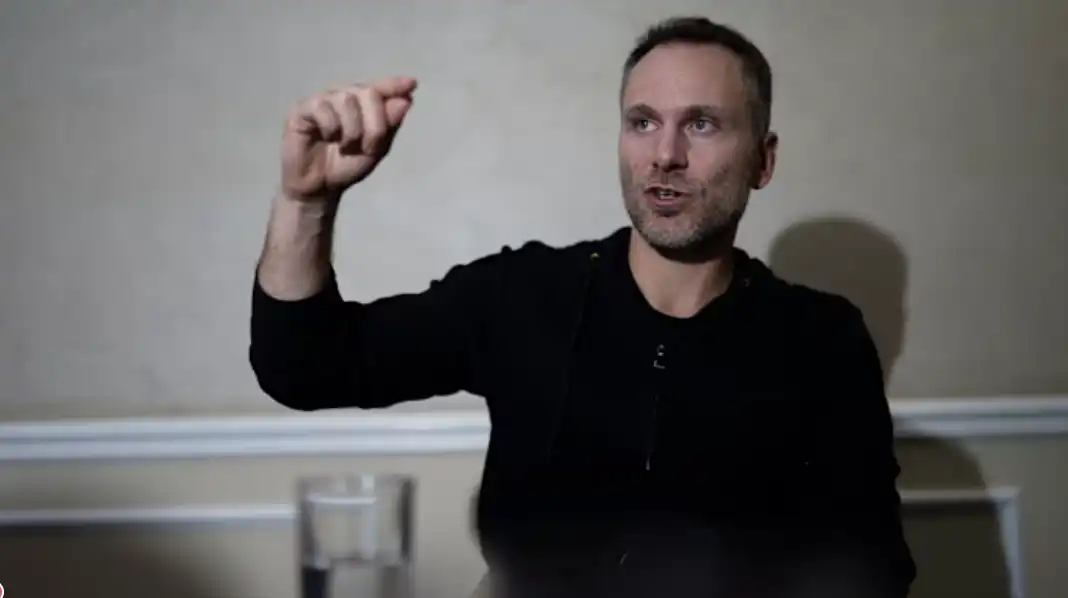
Tether CEO Paolo Ardoino said: "The money these AI companies make is similar to what we make, just with an extra minus sign in front."
As investors questioned its $500 billion valuation target, Tether, the world's largest stablecoin issuer, proactively reduced the external expectations and spotlight on its funding scale.
The El Salvador-registered crypto group had initiated funding talks last year, aiming to raise $15 billion to $20 billion, a transaction that would have catapulted it into the ranks of the world's most valuable private companies.
However, sources revealed that in the face of investor hesitation, Tether's advisors have begun discussing the possibility of raising only around $5 billion.
Tether CEO Paolo Ardoino toned down the potential funding scale, stating that the previously proposed $15 billion to $20 billion target was "a misunderstanding."
"That number is not our target, it's just the upper limit we are willing to sell," he said in an interview. "Even if we don't sell a penny, we would still be very satisfied."
Ardoino stated that Tether is highly profitable and has received "a lot of interest" at the $500 billion valuation level. He added that the company has not decided how much equity to sell, in part because insiders are unwilling to reduce their holdings.
The USDT stablecoin issued by this company, with a current scale of approximately $185 billion, is seen as the "reserve currency" of the digital asset market. Control of Tether is concentrated in the hands of a small group of long-serving executives.
The market has been closely watching Tether's progress in bringing in prominent investors, seeing it as a key indicator of investor interest in the crypto industry. It is widely believed that this move is more to solidify Tether's reputation and network, especially since the company generates billions of dollars in profit annually and does not urgently need additional capital.
After Trump was elected president, the market was briefly uplifted by the expectation of a more crypto-friendly U.S. regulatory environment; however, over the past six months, as traders exited high-risk speculative assets, the crypto market has seen a significant decline.
Some investors have privately expressed concerns about a $500 billion valuation, which would place Tether among the top privately held companies, alongside AI companies like OpenAI, Anthropic, as well as Musk's SpaceX and ByteDance, the parent company of TikTok.
Ardoino stated that Tether, which disclosed a profit of around $10 billion last year, mainly from asset reserve returns to support USDT value, should receive a valuation similar to these still loss-making AI model companies.
"The money these AI companies make is similar to ours, just with a minus sign in front," he said. "If you are willing to believe that an AI company with a huge minus sign in front is worth $800 billion, that's your prerogative."
Tether and its financing advisor Cantor Fitzgerald both declined to comment on the size of this round of financing. This investment bank is run by the children of U.S. Secretary of Commerce Howard Lutnick and also holds shares in Tether.
Insiders cautioned that related negotiations are still ongoing, and the financing terms may change; if the overall crypto market regains strength, investor sentiment could also reverse.
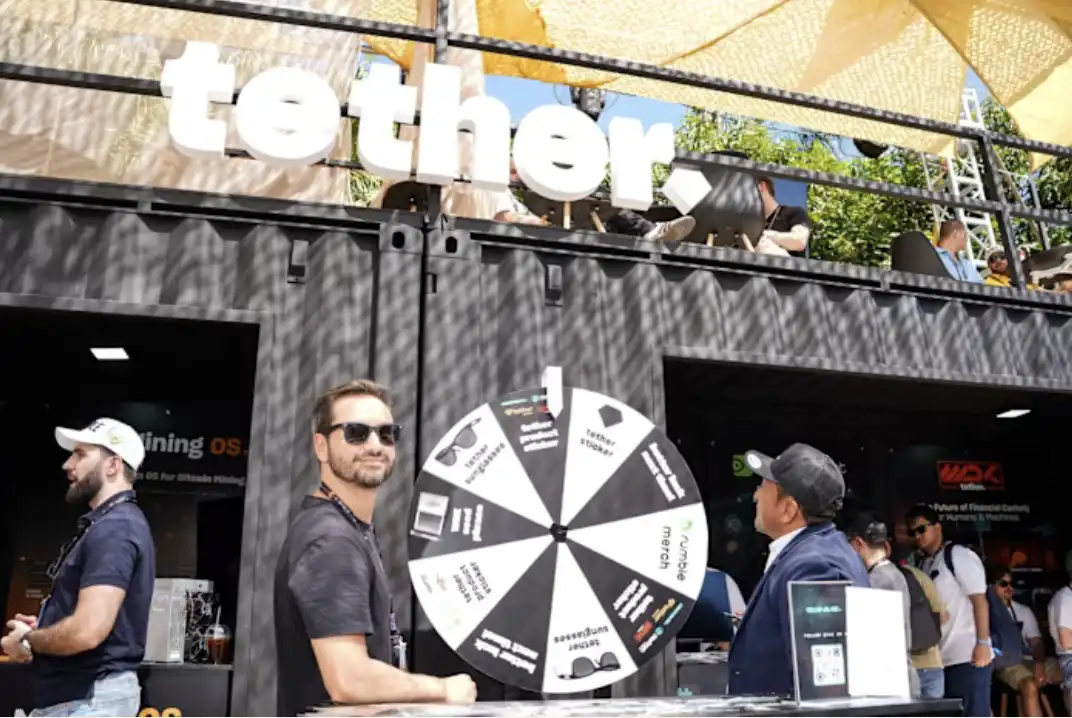
The efforts of Tether to bring in heavyweight investors have always been seen as a key signal of investor interest in the crypto industry.
Ardoino stated that the effective U.S. stablecoin legislation signed by Trump, as well as the listing of U.S.-based competitor Circle last year, have further increased market attention and momentum for Tether. Tether recently also launched a new token in the U.S. that complies with this regulatory framework.
However, sources familiar with the matter said some potential investors remain cautious about the regulatory risks surrounding Tether. Since its founding in 2014, this crypto group has long been under scrutiny, with controversies mainly focused on whether its tokens have been used for illicit activities and the transparency and quality of its asset reserves.
In recent years, Tether has started regularly publishing quarterly reserve attestations through the accounting firm BDO Italia, but has still not undergone a full independent audit.
Ardoino stated that the company has shown potential investors the depth of its technical tools for collaboration with law enforcement agencies in order to demonstrate its capabilities in compliance and law enforcement cooperation.
Standard & Poor's Global Ratings lowered Tether's reserve rating to the lowest tier in its system at the end of last year, citing the continuous increase in its exposure to high-risk assets such as Bitcoin and gold. In response, Ardoino stated, "We wear your scorn as a badge of honor."
Since 2020, USDT's growth has significantly accelerated, making Tether one of the world's largest buyers of U.S. Treasury bonds and a key player in the gold market in recent months.
This large-scale asset allocation has positioned Tether as one of the most critical links between the global financial system and the highly volatile cryptocurrency world.
Tether's profit for the year 2025 fell by about a quarter compared to the previous year. Ardoino attributed this change to the decline in Bitcoin prices. He also added that benefiting from the rise in precious metal prices, the company made approximately $8 billion to $10 billion in gains on its gold holdings.
You may also like
The impact of OUSD on Circle, Tether, and Paxos: not a single negative factor, but a more complex reshaping of competition
Li Feifei's latest long article: When video generation, robots, and NVIDIA all claim to be world models, we need a taxonomy
Blaming the desolation of the cryptocurrency world on the rise of AI is a form of intellectual laziness
Strategy Founder: The Next 10 Years of Bitcoin
Forbes Special Report: Stablecoin cross-border payments are faster now, but not cheaper yet
A valuation of 8 billion dollars, doubling in 8 months! What makes the crypto-friendly bank Erebor Bank stand out?
340 billion valuation: Li Yanhong's largest IPO, a seat in Kunlunxin's shares is hard to come by
Stablecoins are the "royalists" of the crypto world: Open USD brings the old currency system into play
Cape Verde 2-3 Argentina: The Underdog Team That Stunned the World in Defeat
Cape Verde's run ended in a 3-2 defeat to Argentina, but their journey — three unbeaten draws, one heroic goalkeeper, and a fight that pushed the defending champions to the brink — is the kind of story markets recognize too: small caps can rattle blue chips long before anyone expects it.
Semiconductor stocks plummet, yet Anthropic wants to create a 2nm chip
Where is Zhao Changpeng's billion-dollar investment going? YZi Labs' investment landscape fully revealed
Ethereum Foundation Report: A Basic Guide to Ethereum for Governments and Financial Institutions
A pre-announced harvesting case: After the cryptocurrency price dropped by 99%, the public chain Saga exited to transform into AI
When American giants collectively "defect" from Chinese AI models
BIS Report Compliance Observation: The Real Risks of Stablecoins, Not Just "Depegging"
Portugal 2-1 Croatia: Ronaldo's 20-Year Knockout-Stage Drought Ends With a Debt Finally Collected
Portugal beat Croatia 2-1 in the 2026 global football championship's knockout rounds as Ronaldo scored his first-ever knockout-stage goal, Gonçalo Ramos struck a stoppage-time winner, and VAR ruled out a late equalizer for offside.
Bitcoin Price Prediction July 2026: Will BTC Recover to $70K or Drop Below $55K?
A South Korean company that learned the strategy of hoarding coins, from a bull market to delisting?
The impact of OUSD on Circle, Tether, and Paxos: not a single negative factor, but a more complex reshaping of competition
Li Feifei's latest long article: When video generation, robots, and NVIDIA all claim to be world models, we need a taxonomy
Blaming the desolation of the cryptocurrency world on the rise of AI is a form of intellectual laziness
Strategy Founder: The Next 10 Years of Bitcoin
Forbes Special Report: Stablecoin cross-border payments are faster now, but not cheaper yet
A valuation of 8 billion dollars, doubling in 8 months! What makes the crypto-friendly bank Erebor Bank stand out?