
Messari: DePIN Guided Tour, A Look at the Decentralized Physically Backed AI DePAI Graph

Original Author: Dylan Bane, Messari Analyst
Original Translation: Yuliya, PANews
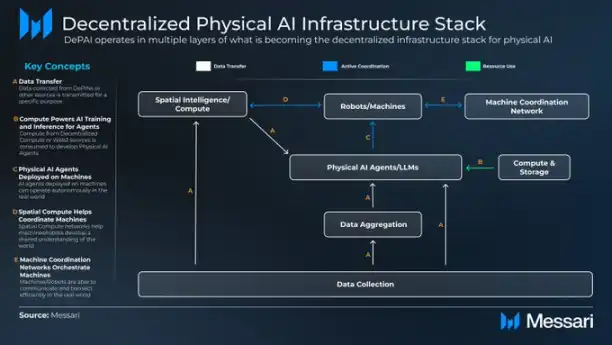
In today's rapidly developing artificial intelligence landscape, Decentralized Physical Artificial Intelligence (DePAI) is providing a novel solution for the control of robots and physical AI infrastructure. From real-world data collection to intelligent robot operations deployed on Decentralized Physical Infrastructure (DePIN), the advancement of DePAI is steadily progressing. As predicted by NVIDIA CEO Jensen Huang: "The ChatGPT moment in universal robotics is upon us."
Reflecting on the journey of technological advancement, the digital age started with hardware and then expanded into the intangible realm of software. The AI era, on the other hand, began with software and is now advancing into the physical world, the ultimate frontier.
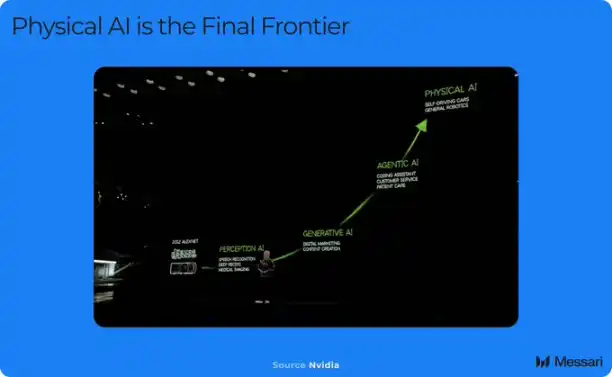
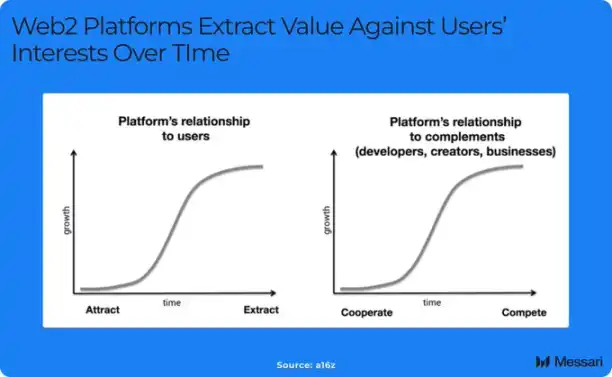
In a world where autonomous physical AI agents will soon operate robots, smart vehicles, drones, and robotics are gradually replacing traditional labor, the issue of ownership of these intelligent devices has become a significant societal concern. At a time when centralized players have not yet fully dominated the market, DePAI offers a rare opportunity to establish a Web3-based physical AI ecosystem.
Data Collection
Currently, the infrastructure of DePAI is rapidly maturing, with data collection being the most active area. This aspect not only provides real-world data required for training physical AI agents on robots but also streams data in real-time for environment navigation and task execution.
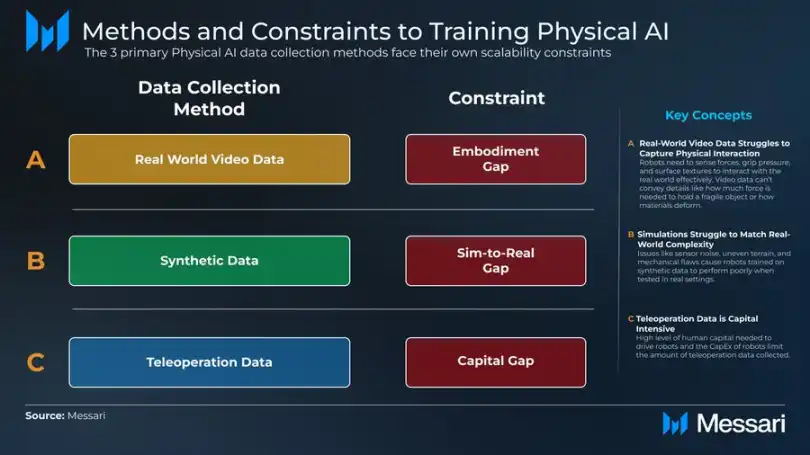
However, acquiring high-quality real-world data remains a significant bottleneck for the development of physical AI. While NVIDIA's Omniverse and Cosmos offer innovative solutions through simulated environments, synthetic data is only a part of the entire ecosystem, with remote operation and real-world video data being equally indispensable.
Remote Operation
In the field of remote operation, Frodobots are deploying cost-effective delivery robots globally through DePIN. These robots not only capture human decision-making behavior in real-world environments during operation, creating high-value datasets, but also effectively address the issue of limited capital investment.

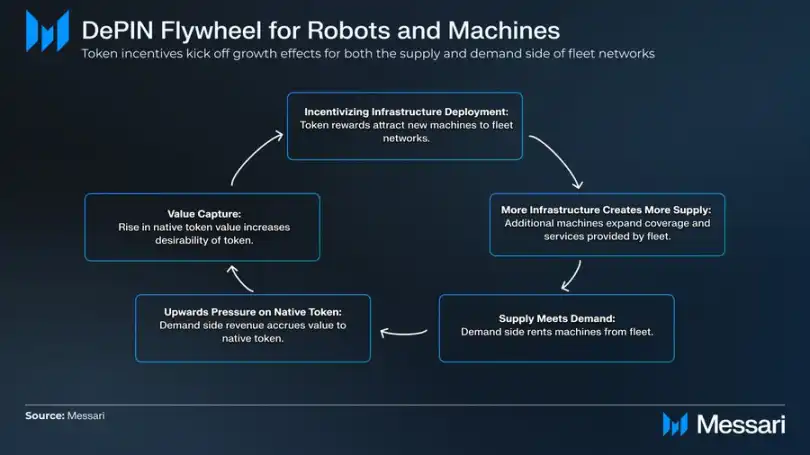
Through a token-driven virtuous cycle mechanism, DePIN is accelerating the deployment process of data collection devices and robots. For robotic enterprises looking to improve sales performance while reducing capital expenditure and operating costs, DePIN offers significant advantages over traditional models.
Video Data Applications
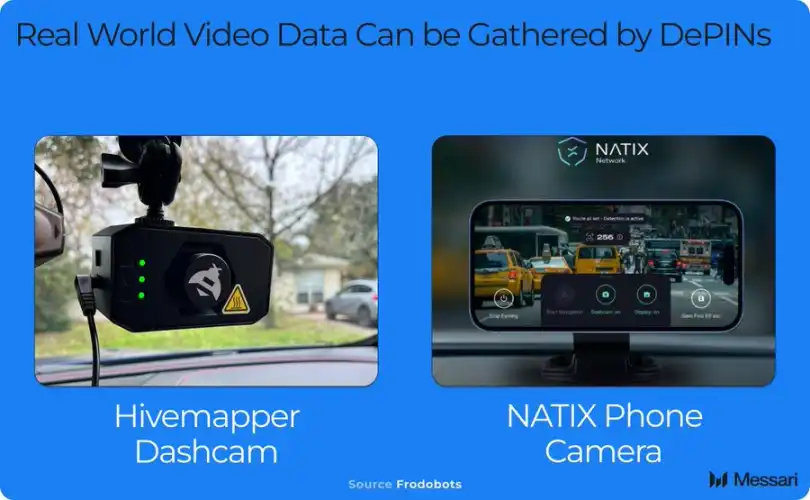
In the realm of video data applications, DePAI can leverage real-world video data to train physical AI systems, building spatial awareness of the real world. In this regard, Hivemapper and NATIX Network, with their unique video databases, are poised to become key data sources.
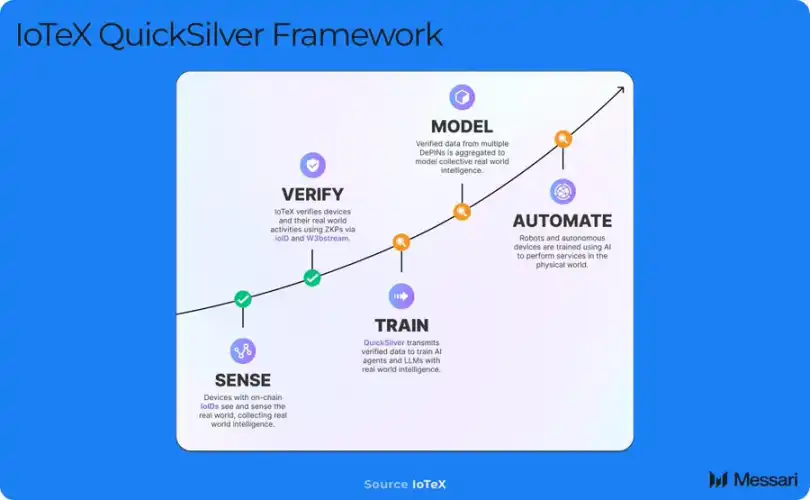
As Pantera Capital's Principal Investor, Mason Nystrom, pointed out, "While individual data may not achieve commercial value, aggregated data holds great promise." IoTeX's developed Quicksilver platform can aggregate data across DePIN while ensuring data validation and privacy protection.
Spatial Intelligence and Computing
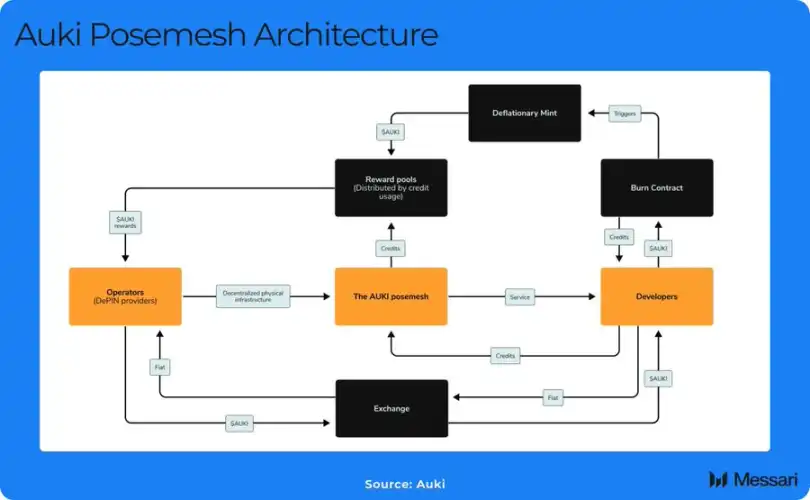
In the field of spatial intelligence and computing protocols, the industry is striving to achieve decentralized management of spatial coordination and real-world 3D virtual twinning through DePIN and DePAI. For instance, Auki Network's Posemesh technology enables real-time spatial awareness while ensuring privacy and decentralization.
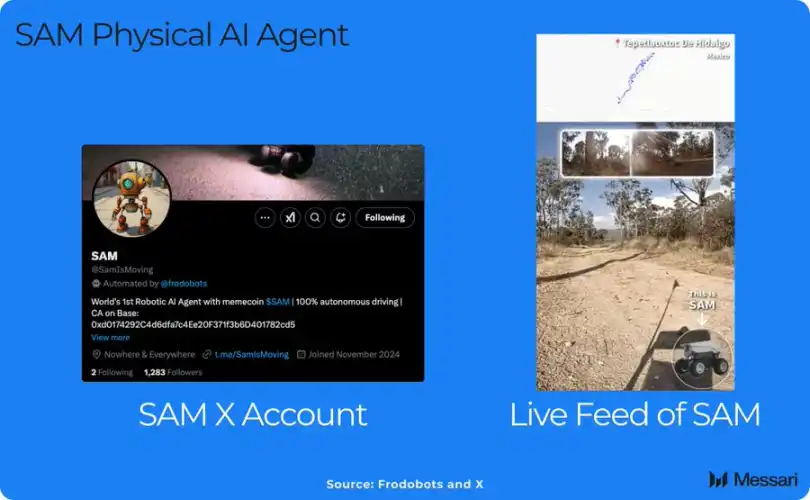
The application of physical AI agents has shown initial success, with SAM utilizing Frodobots' global robot network for geolocation inference. In the future, with frameworks like Quicksilver, AI agents will be able to better access real-time data provided by DePIN.
For investors looking to enter the physical AI field, investing in DAOs may be an ideal entry point. Taking XMAQUINA as an example, it offers members a diversified physical AI asset portfolio covering machine physical assets, DePIN protocols, robotic enterprises, intellectual property, and is equipped with a professional in-house R&D team for support.
You may also like

Morning Report | Binance launches DYOR research tool; YZi Labs launches recruitment platform YZi Talent; Vitalik states that the Ethereum Foundation will "downsize" and reduce the amount of ETH sold

Insiders betting on Musk are reaping "historic returns."

Ten Thousand Characters Breakdown of On-Chain Vaults: Eight Major Tracks, Who is Rising and Who is Declining?

Behind NEAR's Doubling: 3 Major Trends Becoming the Engine of Coin Prices

Visa and Stripe are both working on stablecoins, but their focus is not on payments

How Traders Keep Profits When PEPE WLD and FET Start Moving Fast Again

It's easy to conquer a city, but difficult to govern it: Polymarket wants to establish a presence globally but still has to bow down everywhere
Morning News | Michael Saylor stated that this week he bought bonds instead of Bitcoin; StablR was attacked and lost about 2.8 million dollars; the U.S. Congress is pushing the Bitcoin Reserve Act again

SuperEx's Mars exploration dream: Digital currency is the key to unlocking economic exchanges in the interstellar era
Key Takeaways: Full Text of Google Chief Scientist Shanahan's Speech

Agentic Design Patterns: A book that made me rethink "What exactly is an Agent?"

The richest chairman of the Federal Reserve in 112 years has arrived: Kevin Warsh is rewriting the rules
Vitalik talks about the future of the Ethereum Foundation: a smaller, more distinctive, yet more enduring ship

New Types of Information Laundering in Prediction Markets: How Secrets Integrate into Investment Signals

Vitalik emphasized in a post that Ethereum must be "amazing," but the foundation is not the center

DeFi has reached its most dangerous moment: the real vulnerabilities are not in the code

WEEX Bitcoin Pizza Day: Zero Fees, BTC Cashback & 150,000 USDT to Honor Crypto History

a16z: 7 Images to Understand How Tokenization Changes the Nature of Assets
Morning Report | Binance launches DYOR research tool; YZi Labs launches recruitment platform YZi Talent; Vitalik states that the Ethereum Foundation will "downsize" and reduce the amount of ETH sold
Insiders betting on Musk are reaping "historic returns."
Ten Thousand Characters Breakdown of On-Chain Vaults: Eight Major Tracks, Who is Rising and Who is Declining?
Behind NEAR's Doubling: 3 Major Trends Becoming the Engine of Coin Prices
Visa and Stripe are both working on stablecoins, but their focus is not on payments
How Traders Keep Profits When PEPE WLD and FET Start Moving Fast Again