
Limitless Raid TGE: A Covert Launch to Evade Snipers, But Unable to Dodge Market Scrutiny


Original Article Title: "Behind Limitless TGE: A Stealthy Launch to Avoid Snipers, But Couldn't Dodge Market Questions"
Original Article Author: Ethan, Odaily Planet Daily
At 7:30 PM on October 22, the prediction platform Limitless suddenly posted: "Shall we TGE today?"
This sudden question caused a stir in the community. Most people thought it was another intern's "accidental post," and the comments section was filled with jokes. Even project CEO CJ (@cjhtech) swiftly commented: "intern wtf??", "who gave you this button".

At that moment, netizens speculated that this was a joke or a "scripted" marketing stunt. However, an hour later, the plot took a turn—Limitless officially announced the start of the TGE and simultaneously opened the distribution of LMTS tokens via airdrop.
This series of "unexpected official announcements" quickly shifted the community's attention from "joke mode" to "attention mode," and the story behind the TGE gradually revealed a more complex narrative.
Who Is Limitless?
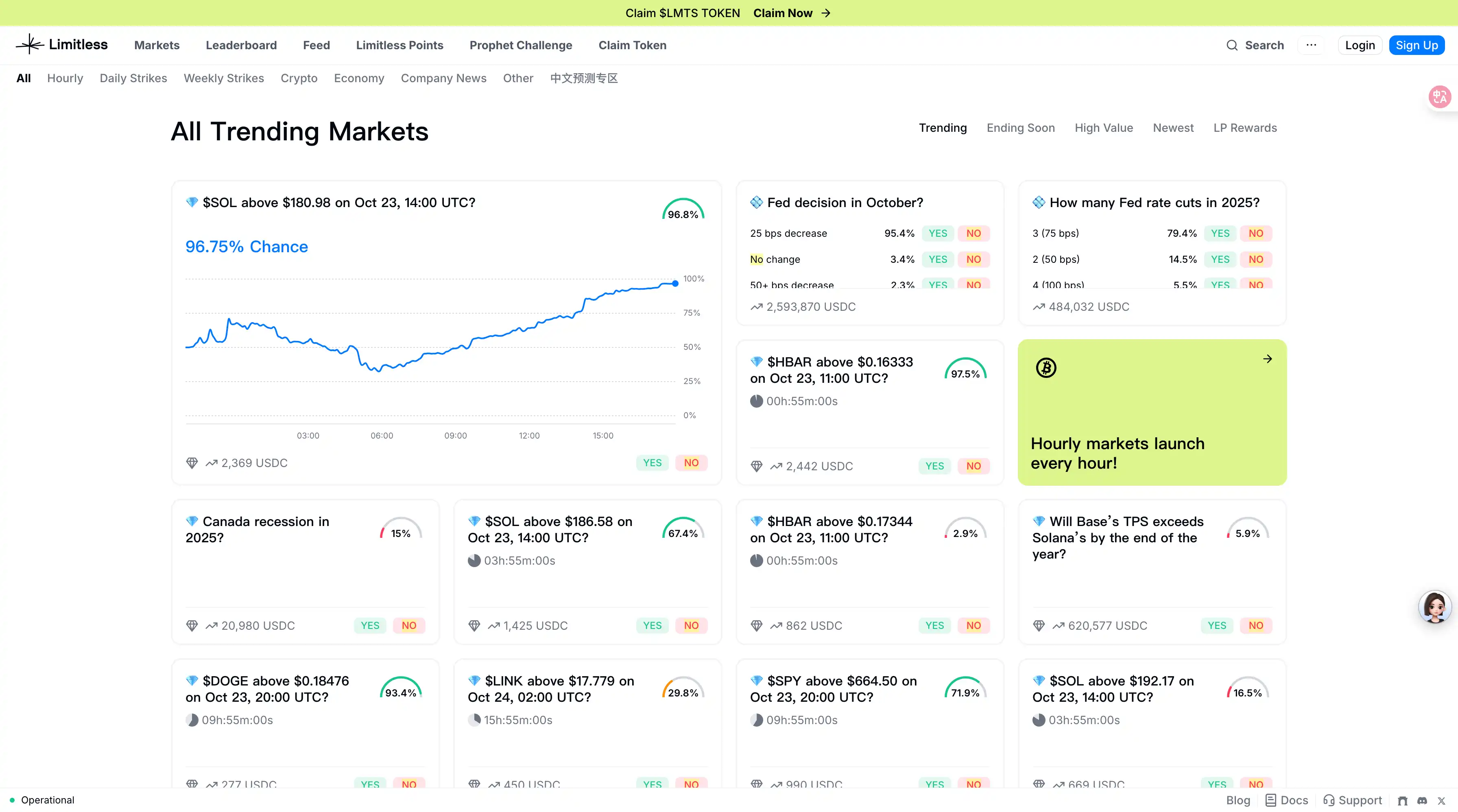
Limitless is a social-based prediction market protocol built on the Basechain, supporting users to create and participate in prediction markets in areas such as cryptocurrency, stocks, sports, and social culture. The project has completed three rounds of funding, with a total funding amount of $17 million, including investment from Coinbase Ventures, 1confirmation, Maelstrom, and other crypto investment institutions.
In terms of mechanism, Limitless is similar to Polymarket: Users participate in predictions by buying shares of specific event outcomes (usually "yes" or "no"). Winning shares settle at $1 upon expiration, while losing shares become worthless.
According to the project's whitepaper, before the outcome is determined, one "yes" share and one "no" share in the same market can be merged to redeem 1 collateral token (usually USDC or Wrapped ETH), which is locked by on-chain smart contracts as the underlying collateral asset for issued shares.
Unlike Polymarket, Limitless is trying to overlay a social scene and a "short-term quick win" mechanism on top of the prediction market to make speculative behavior lighter, faster, and more shareable.
This TGE is officially bringing it into the "public attention" phase.
TGE: From Memecoin Launch to Trust Rift
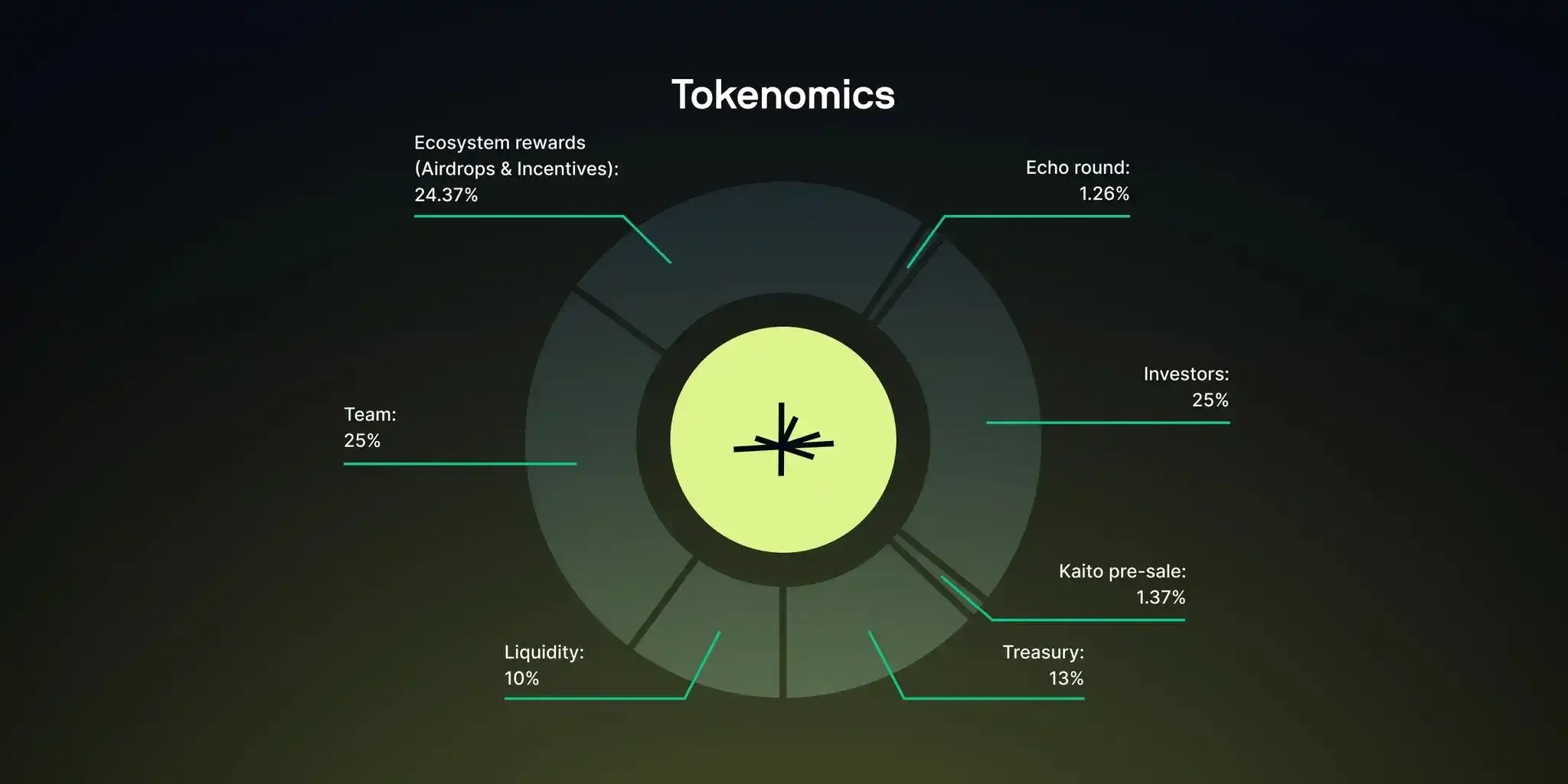
According to the official Blog, Limitless has a total token supply of 1 billion LMTS, with 13.159868% of the TGE circulating supply. The specific allocation is as follows:
· Kaito Presale: 1.37%
· Investors: 25%
· Echo Round: 1.26%
· Team: 25%
· Ecosystem Rewards (Airdrop and Incentives): 24.37%
· Treasury: 13%
· Liquidity: 10%
At the same time, Limitless has announced that the airdrop is now open, and both Limitless Points Season 1 traders and Wallchain Epoch 1 Quackers users may receive the airdrop.
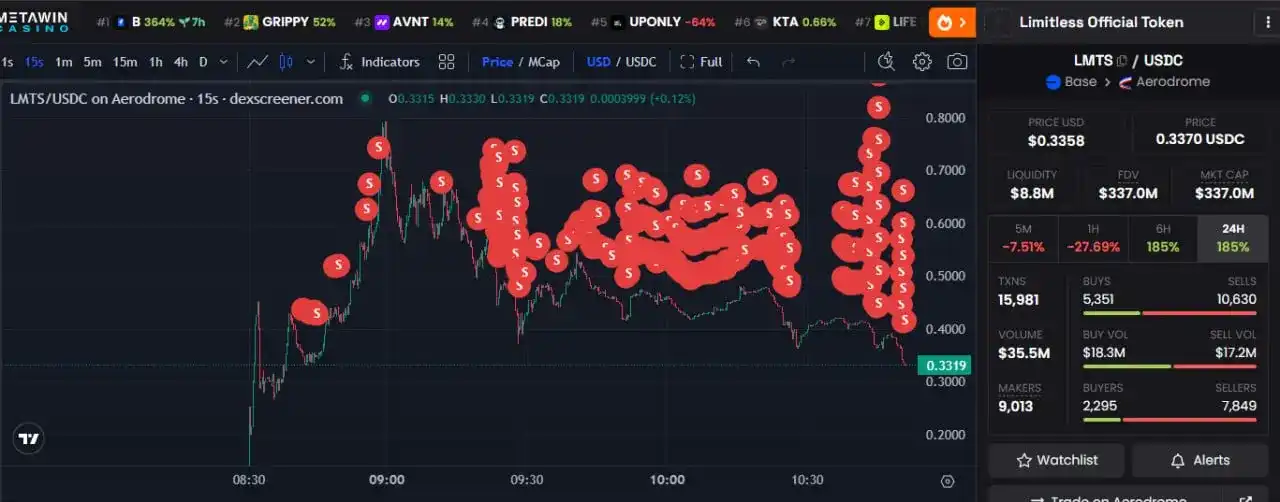
During the first half-hour after the TGE, the price trend of LMTS once made people think this was a "memecoin launch."
The buying sentiment brought on by the hype pushed the price from below $0.2 directly to $0.8, a surge of over 400%. However, the good times were short-lived as the market quickly turned downwards, dropping to a low of $0.196 before the price bounced back to $0.313.
Honestly, such a pace is all too common in new listings: first a rally, then a fall, with the timing almost identical. In theory, such volatility is not enough to raise suspicion, as the market is driven by short-term funds, and price emotionality is the norm.
However, this drop still made some people feel that something was off.
On October 22 at 22:58, KOL @ManaMoonNFT posted an on-chain tracking record on X, indicating that the Limitless team was suspected of ongoing sell-off behavior. Monitoring data shows:
The team-affiliated wallet (0x3c583Be48D2796534f8FC8EA214674Ff055d01d7, initially holding 40 million tokens) transferred 5 million LMTS to a sales address (0xBF3132977d9801506deF8E927c4Ff06E5b0801d1) and sold all of them within a few hours, with a total profit of approximately $2.3 million.
After a brief rebound, approximately 10 million tokens were transferred to the same wallet for further selling.
The market is starting to become cautious. This feels too much like a meticulously planned cash-out. A rift in public opinion has emerged at this moment.
CJ's Response: Explanation or Declaration of War?
Amidst the spreading FUD sentiment, Limitless CEO CJ finally stepped forward to respond.
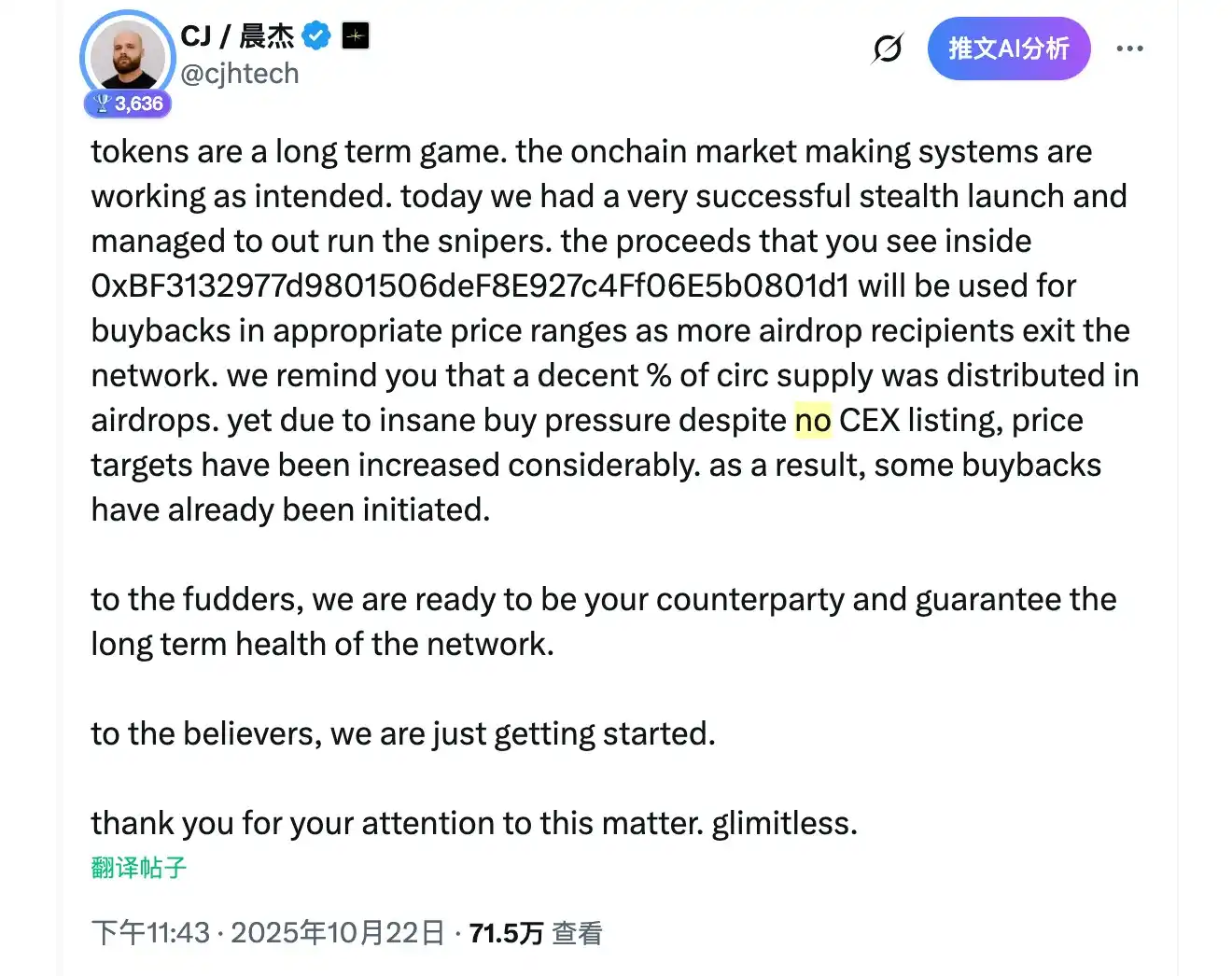
On October 22 at 23:43, he wrote on X, "The token is a long-term game, and the on-chain market-making mechanism is operating as designed."
CJ explained that the observed fund movement in the market was part of the team's buyback plan, especially during the airdrop claimant sell-off phase. He emphasized that the project has not yet landed on a centralized exchange, but buying pressure is strong, and price targets have been revised upwards.
The final statement carried a rather strong tone: "For those spreading FUD, we are prepared to be your counterpart. For believers, we are just getting started."
This response seems to be both an "explanation" and a "declaration of war."
This has made the trajectory of the event even more delicate: while on the surface, the team is stabilizing the price, in reality, community trust has already begun to fracture.
What Is a Stealth Launch?
The term "stealth launch" may be unfamiliar to many. Simply put, it is a defense mechanism adopted by project teams to prevent the token from being sniped by a sniper bot during the initial listing, which could cause drastic price fluctuations.
The usual practice is as follows: first, quietly deploy the contract and conduct small-scale testing to ensure there is no risk of large-scale sniping or arbitrage, then publicly release the token contract address for free market trading.
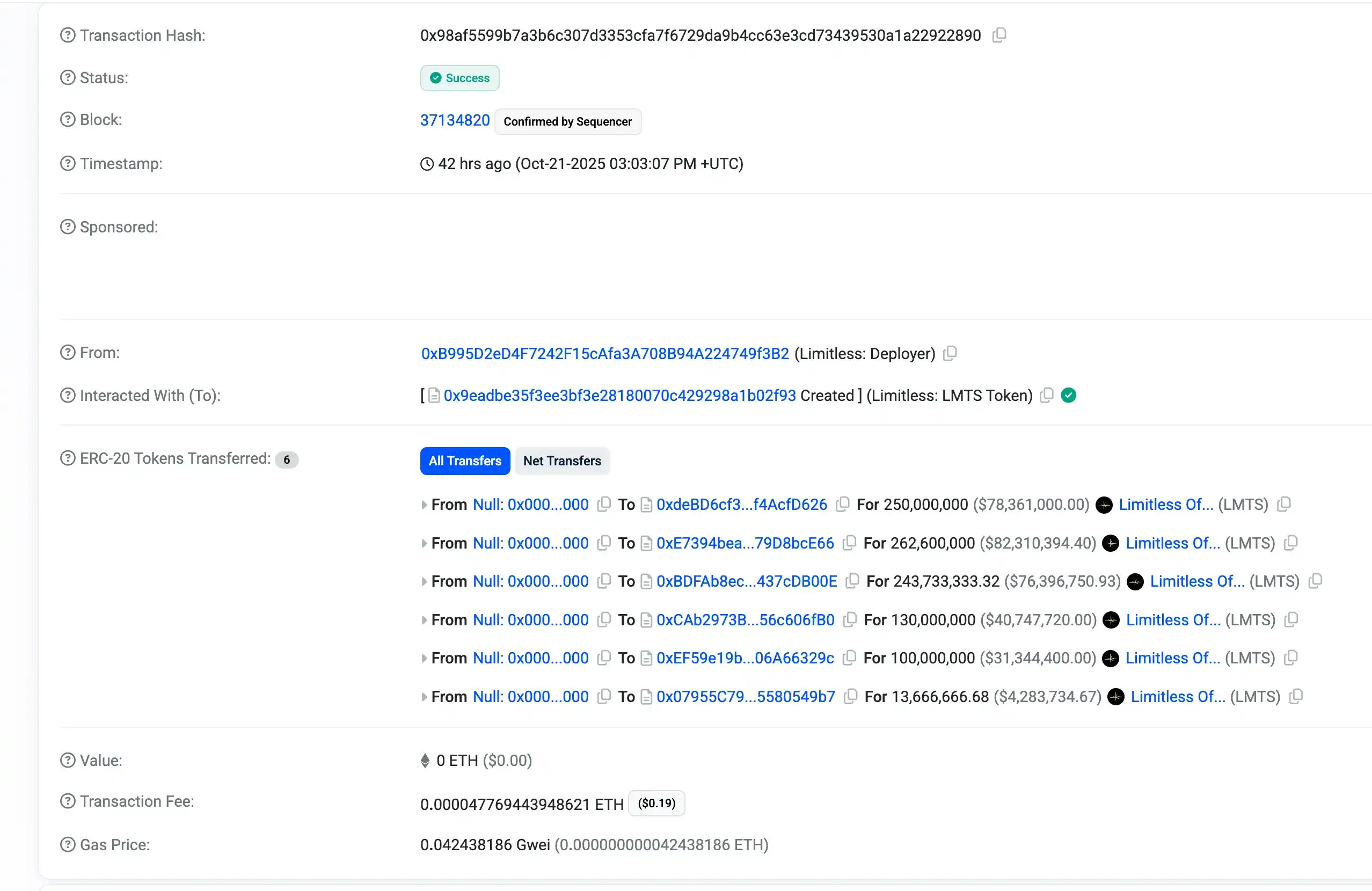
In the case of Limitless's Token Generation Event (TGE), the team claimed to have utilized this strategy. According to on-chain data, the creation time of the LMTS token was approximately only 21 hours before the official announcement. During this period, the project team completed token distribution and contract deployment and only made the contract address public after ensuring everything was "safe."
From the results, this approach did help Limitless avoid a tech snipe, but it also made it harder for outsiders to trace the early fund flow.
The defensive intent and the opaque consequences have now overlapped into a new point of contention.
Summary
As of now, this incident is still brewing, with many doubts yet to be clarified.
For example, the wallets accused of being associated with the team seem to hold tokens that are not within the officially disclosed 25% team share (according to on-chain analysis, the initial 40 million tokens held by this wallet came from the "ecosystem incentive" part). Why were these tokens not subject to a lock-up period? In the tokenomics, only 2.45% of the airdrop and early incentive parts are immediately unlocked. Also, why were these so-called "internal buyback" operations not disclosed in advance?
These questions currently have no answers.
Market sentiment is also gradually cooling off, with LMTS's price sinking like it's hit rock bottom—calm, with a hint of suppression.
You may also like

Morning Report | CoinEx becomes a key hub for Iran to evade sanctions, involving over $3.8 billion in funds; Kalshi seeks a new round of financing, with a valuation potentially rising to $40 billion

From the white-haired stock god to the billionaire fund mogul, the smart people shorting Nvidia are all getting rich using the same framework

Why do cryptocurrency projects always like to change their names?

Global Launch: As predictions become the most scarce asset in the AI era, Manadia is defining the next generation of the value internet

Who is footing the bill for the $64 billion accounting frenzy?
I never expected that the first application of AI x Crypto would be in security auditing

What is your view on Binance's competitive advantages?

ETH has entered a non-consensus phase, and the turning point is approaching!
The shift in the cloud of the air: from despising stablecoins a year ago to the high-profile entry of capital today
The survival dilemma of small and medium exchanges behind the withdrawal anomalies exposed by AscendEX

Why Is Bitcoin Falling Below $60K? 5 Key Market Drivers Explained
Bitcoin has dropped sharply amid ETF outflows, Strategy stock weakness, AI stock rallies, and changing Fed expectations. Explore the key forces driving BTC’s latest correction and what traders should watch next.

Bitcoin vs. Gold in 2026: Which Asset Performs Better in Different Markets?

Morning News | The draft amendment to the People's Bank of China Law aims to clarify the legal status of digital renminbi; South Korea will transfer about 40 unregistered virtual asset service providers to law enforcement agencies
The cryptocurrency industry has entered the "Show Me" era: merely relying on vision is no longer enough

Interpreting the Ethereum Foundation's new structure: Reaffirming self-sovereignty amid institutional trends
Former SpaceX engineer reconstructs the financial execution system using first principles
Standard Chartered Bank sings a 50x rhapsody again, aiming for AAVE to reach 3500 USD

Tidal Investment: We still have a positive outlook on the AI industry chain, but the reasons have changed
Morning Report | CoinEx becomes a key hub for Iran to evade sanctions, involving over $3.8 billion in funds; Kalshi seeks a new round of financing, with a valuation potentially rising to $40 billion
From the white-haired stock god to the billionaire fund mogul, the smart people shorting Nvidia are all getting rich using the same framework
Why do cryptocurrency projects always like to change their names?
Global Launch: As predictions become the most scarce asset in the AI era, Manadia is defining the next generation of the value internet
Who is footing the bill for the $64 billion accounting frenzy?
I never expected that the first application of AI x Crypto would be in security auditing


