
Bitcoin Flash Crashes Overnight, Worst-Case Scenario Could See a Dip to $80,000?

Original Article Title: "Crypto Market Experiences Overnight Flash Crash, Bitcoin Worst-Case Scenario to Drop to $80,000?"
Original Article Author: Lawrence, Mars Finance
At 3:15 a.m. Beijing time on February 19, the price of Bitcoin suddenly flash crashed to $93,300, hitting a new low in nearly two weeks. Although there was a subsequent rebound to $95,400, the significant price volatility caused a major shock to the market.
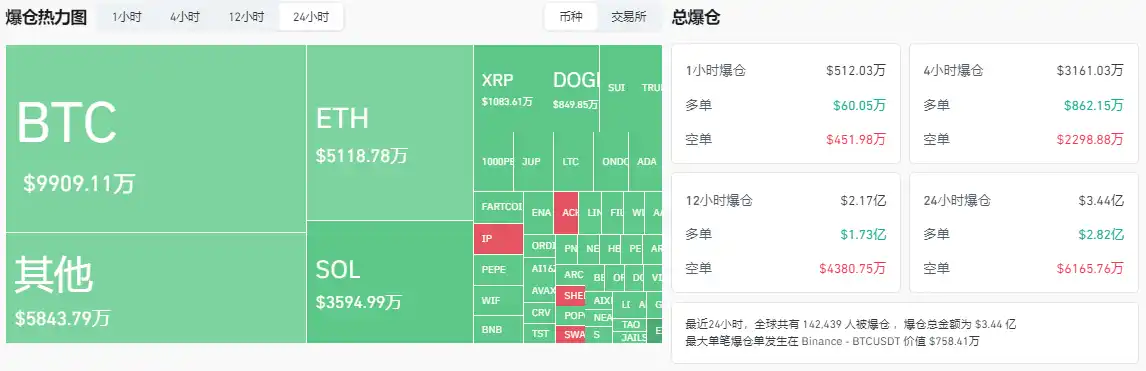
A 14-hour intense fluctuation plunged the derivatives market into chaos. According to Coinglass data, in the past 24 hours, 142,439 investors globally were liquidated, with a total liquidation amount of $344 million. The market's violent oscillation triggered investor panic and exposed the vulnerability of the cryptocurrency market.
Differential Performance of Core Assets
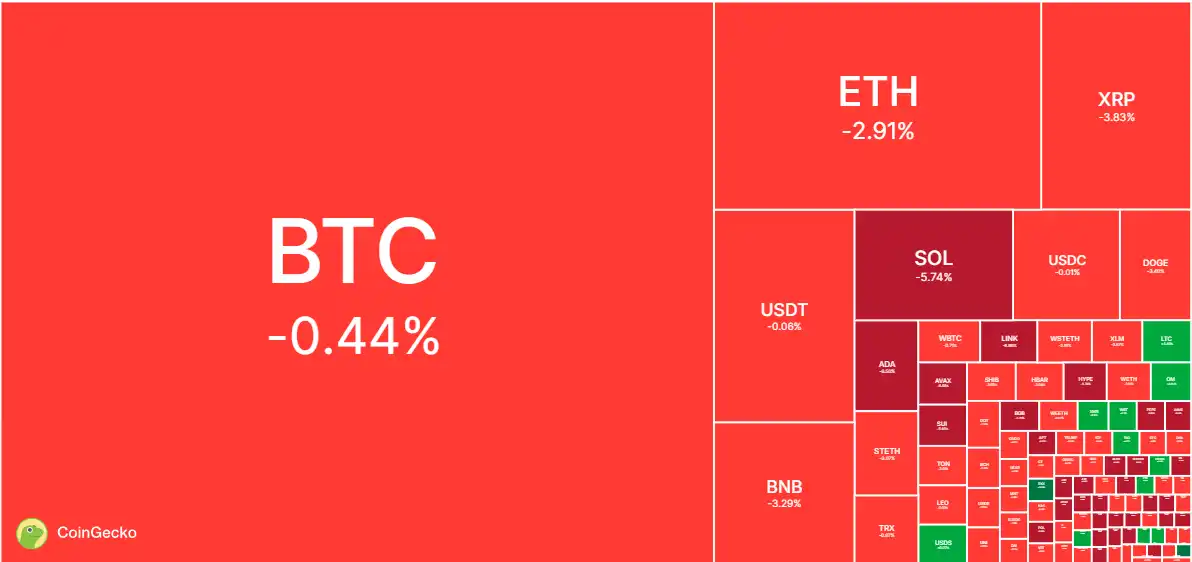
The crypto index shows a significant stratification of the market in this round of adjustment:
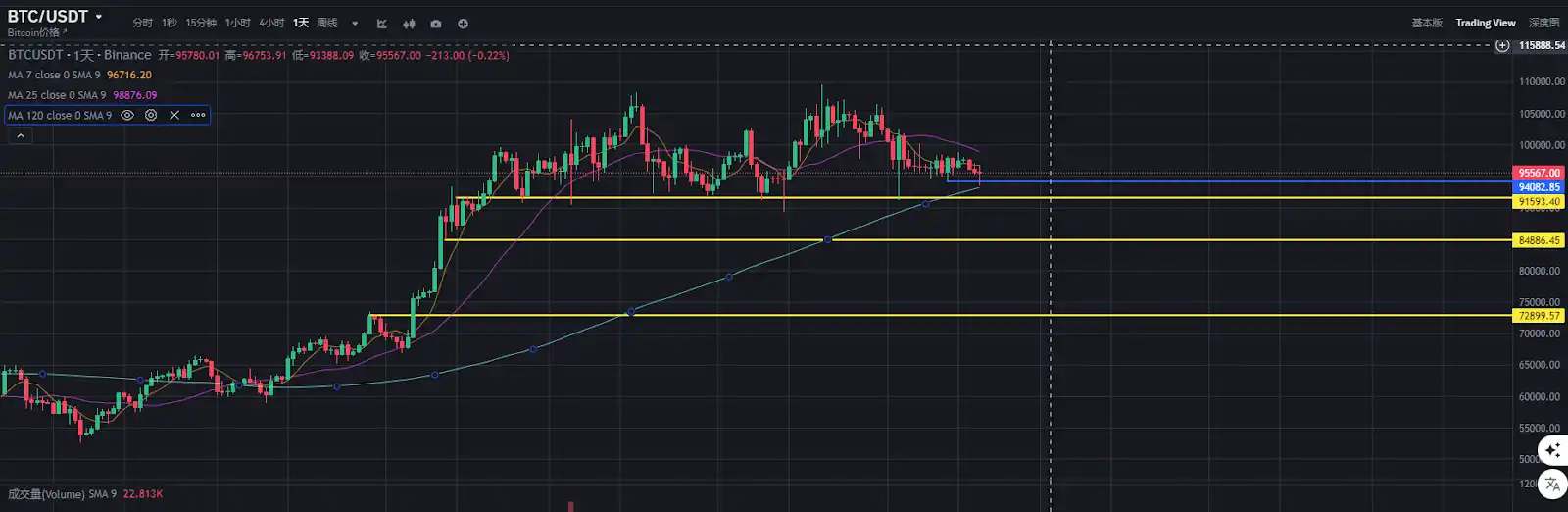
Bitcoin: Despite a 3.2% weekly decline, it remains above the 120-day moving average (around $93,000).
Ethereum: It bottomed out at the key psychological level of $2,600 (a 9.1% drop from the weekly high) and has since rebounded to $2,660, with a 30-day volatility of 47%
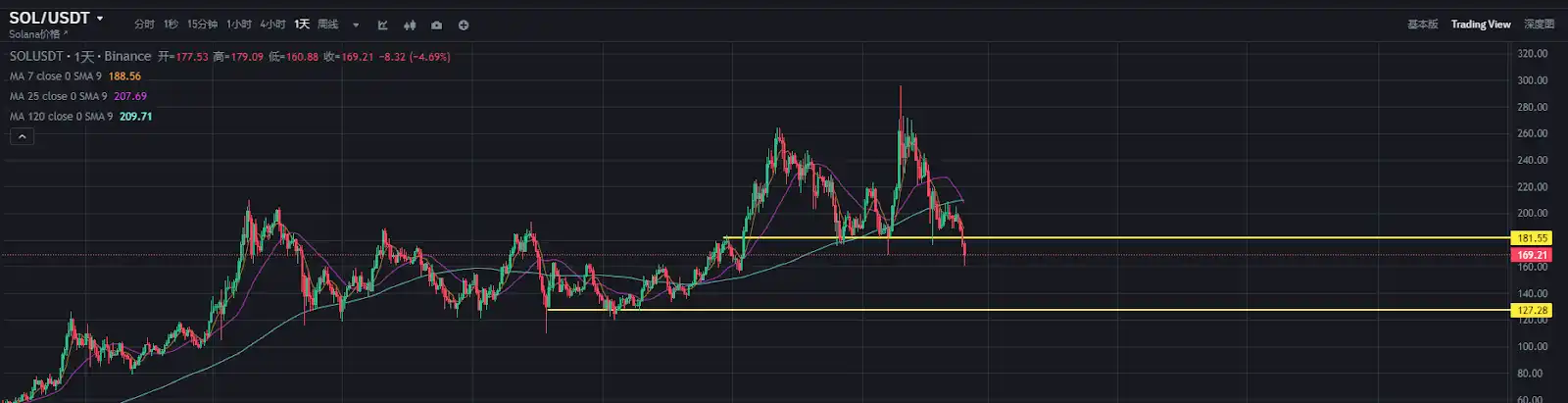
Altcoins in Ruins: Solana (SOL) plummeted by 20%, reaching a low of $160, currently priced at $169, erasing all gains since January 13. Dogecoin (DOGE) fell to $0.24, while XRP struggles to hold support around $2.47.
LIBRA Event Impacting Market Sentiment
The ongoing uncertainty in the macroeconomy continues to affect the cryptocurrency market, and the "scam" incident involving the LIBRA meme coin has exacerbated this downtrend sentiment.
QCP Capital's cryptocurrency options trading desk pointed out in their market analysis: "Due to the weak performance of ETH and other altcoins, Bitcoin's dominance has risen to 60%, its highest level in four years. The recent scandal involving Argentine President Javier Milei and LIBRA has also undermined confidence in altcoins and meme coins."
In addition, Bitcoin's upside has been limited since the Federal Reserve paused its hawkish interest rate policy in January. Federal Reserve Governor Patrick Harker has recently maintained a hawkish stance, stating that interest rates will continue to be stable until inflation is under control. This bearish sentiment has kept the Bitcoin price below $100,000 over the past two weeks, but Bitcoin's market dominance (BTC.D) has risen to over 60%, further suppressing the altcoin rebound.
Analyst Jamie Coutts believes that before Bitcoin may rebound, the market may experience another rally.
Bitcoin Cross-Exchange Flow Pulse Turns Bearish
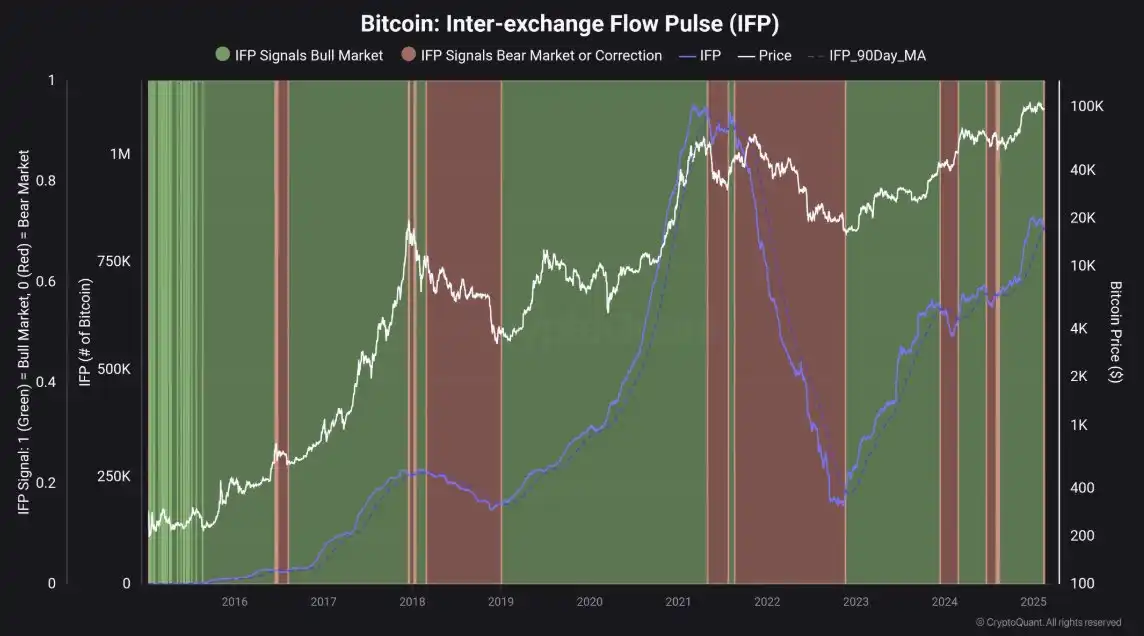
Bitcoin cross-exchange flow pulse chart. Data source: CryptoQuant
According to on-chain analyst Maartunn's analysis, Bitcoin's Inter-Exchange Flow Pulse (IFP) has turned negative, indicating a decrease in potential investors' risk appetite. The IFP metric measures the flow of Bitcoin between the spot and derivatives markets. Historical data shows that when the market is bullish and investor sentiment is high, more Bitcoin moves from spot to derivatives markets. However, when the market weakens, Bitcoin moves out of the futures market and into spot exchanges, showing investors' expectation of a price decline.
On February 16, the IFP metric turned negative for the first time since the third quarter of 2024, indicating a potential shift in market sentiment. Bitcoin researcher Axel Adler Jr also pointed out that Bitcoin futures' long liquidations have reached the highest level in two years. This is similar to the situation in January 2022, when long liquidations marked the beginning of a bear market.
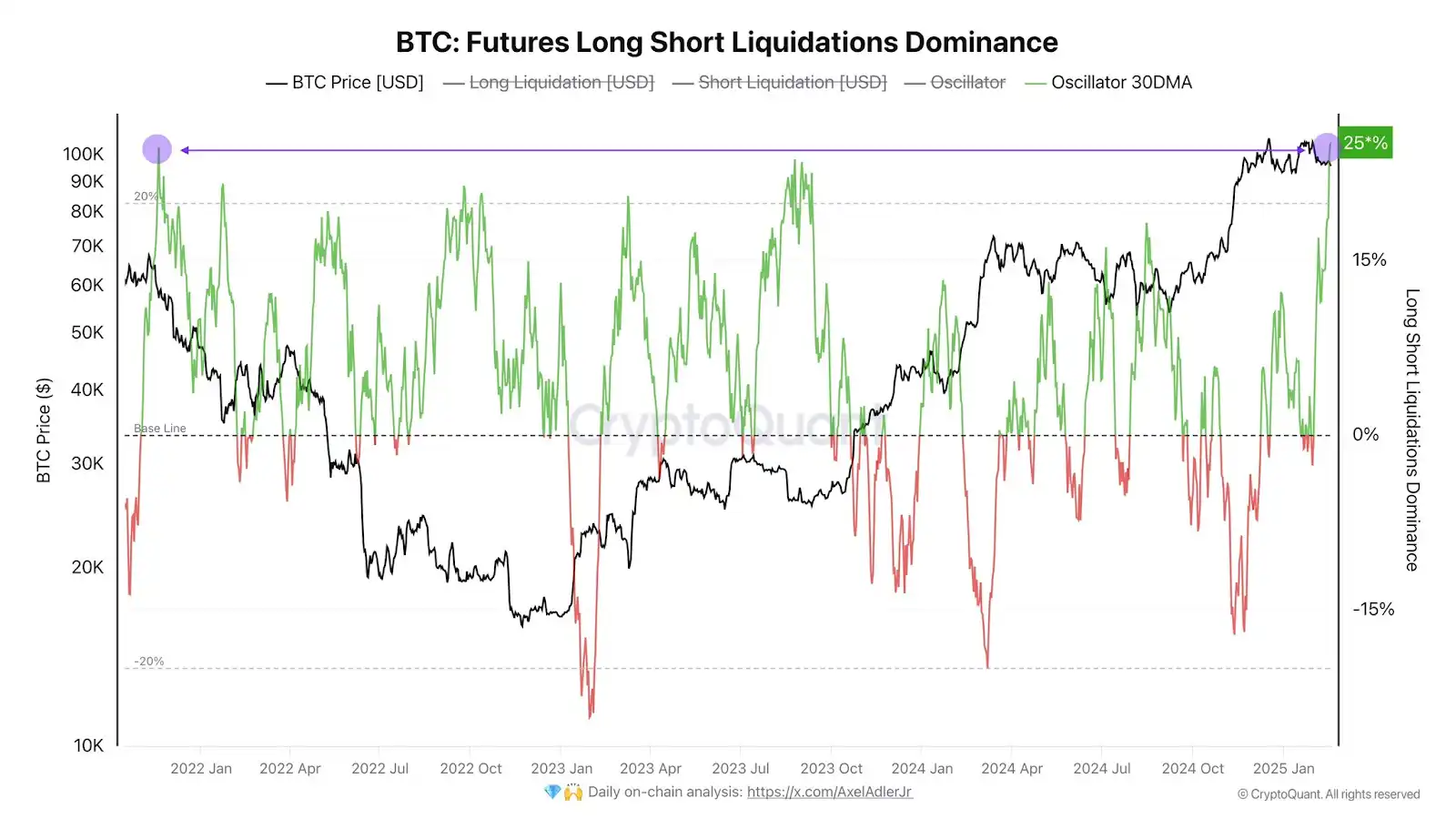
Bitcoin futures long/short liquidation dominance chart. Data source: X.com
Nevertheless, Adler stated that the market has responded to the pressure, indicating that buyers are still active during the adjustment period, engaging in "buying the dip," thereby limiting the extent of Bitcoin's decline.
However, for the bulls, the situation is not completely out of control, as Adler added,
“Currently, the market has responded adequately to this pressure, which actually indicates strong demand during the adjustment period. Buyers are actively 'buying the dip,' limiting the depth of Bitcoin's decline.”
Bitcoin's Worst-Case Scenario Could Drop to Near $80,000
Since February 3, Bitcoin has been consolidating in the range of $95,000 to $99,000. Over the past two weeks, the $95,000 support level has been tested five times. Continued testing of the support level may weaken the effectiveness of this range and increase the risk of breaking below support. Therefore, Bitcoin could close below $95,000 for the first time in the upcoming trades.
If the support level is breached, the price may further decline to a range between $91,130 and $88,909. If the market turns more bearish, the price could retrace to a range between $81,699 and $85,160, which was the price range during Bitcoin's early "Trump Pump" rebound period.
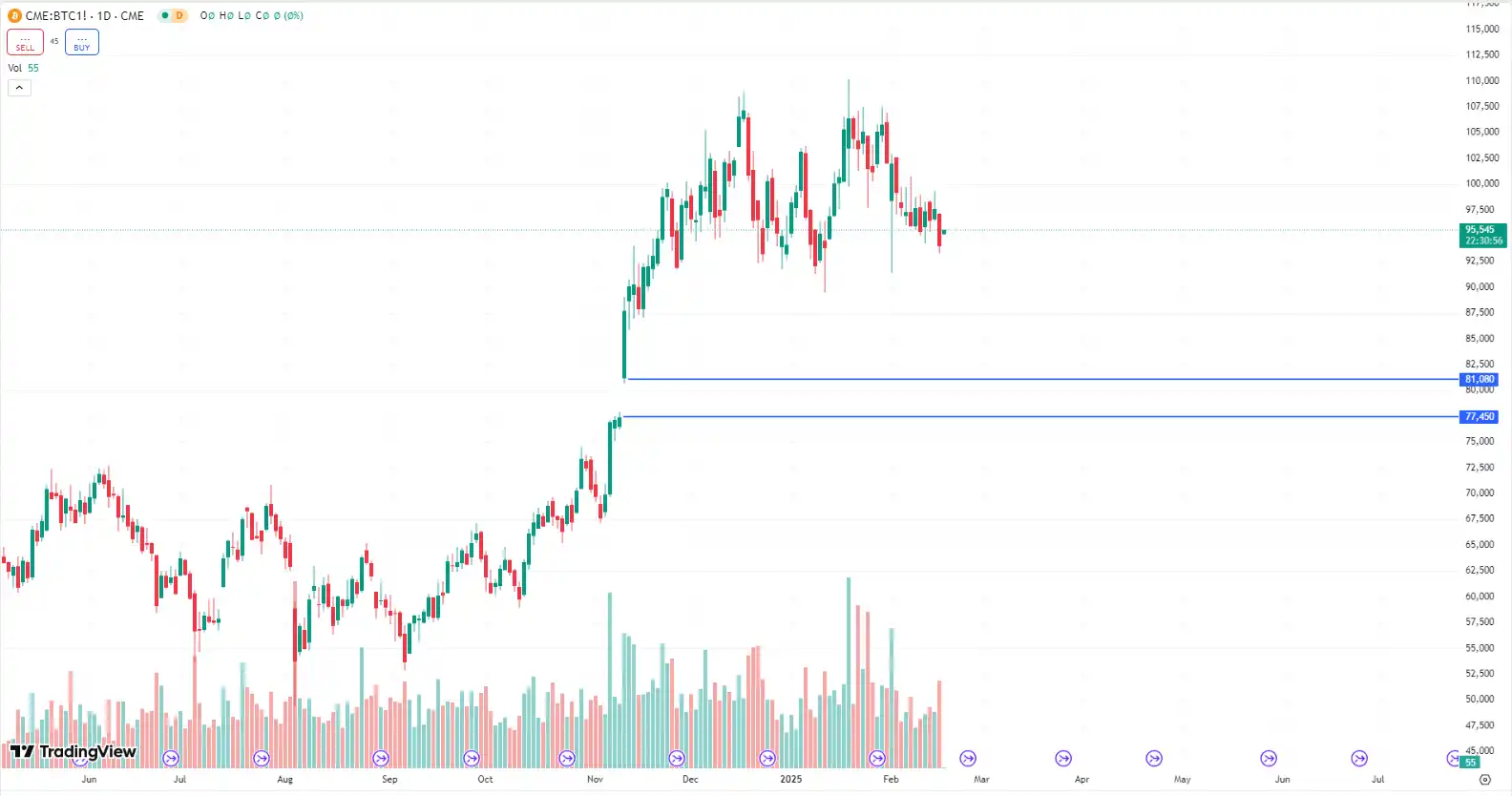
The CME's daily gap still remains between $77,000 and $80,000, which could represent Bitcoin's worst-case scenario, implying a further potential 15% drop in price.
You may also like

Senior Public Company Financial Audit: Taking Hashkey as an Example, Discussing Which Account to Include for Exchange Issued Platform Tokens?

Bankless Founder: Why I Sold All My ETH
Morning News | Hyperliquid launches off-chain event prediction market contracts; Strategy completes $1.5 billion debt buyback; Kelp DAO announces rsETH has fully recovered

Morning Report | Binance launches DYOR research tool; YZi Labs launches recruitment platform YZi Talent; Vitalik states that the Ethereum Foundation will "downsize" and reduce the amount of ETH sold

Insiders betting on Musk are reaping "historic returns."

Ten Thousand Characters Breakdown of On-Chain Vaults: Eight Major Tracks, Who is Rising and Who is Declining?

Behind NEAR's Doubling: 3 Major Trends Becoming the Engine of Coin Prices

Visa and Stripe are both working on stablecoins, but their focus is not on payments

How Traders Keep Profits When PEPE WLD and FET Start Moving Fast Again

It's easy to conquer a city, but difficult to govern it: Polymarket wants to establish a presence globally but still has to bow down everywhere
Morning News | Michael Saylor stated that this week he bought bonds instead of Bitcoin; StablR was attacked and lost about 2.8 million dollars; the U.S. Congress is pushing the Bitcoin Reserve Act again

SuperEx's Mars exploration dream: Digital currency is the key to unlocking economic exchanges in the interstellar era
Key Takeaways: Full Text of Google Chief Scientist Shanahan's Speech

Agentic Design Patterns: A book that made me rethink "What exactly is an Agent?"

The richest chairman of the Federal Reserve in 112 years has arrived: Kevin Warsh is rewriting the rules
Vitalik talks about the future of the Ethereum Foundation: a smaller, more distinctive, yet more enduring ship

New Types of Information Laundering in Prediction Markets: How Secrets Integrate into Investment Signals

Vitalik emphasized in a post that Ethereum must be "amazing," but the foundation is not the center
Senior Public Company Financial Audit: Taking Hashkey as an Example, Discussing Which Account to Include for Exchange Issued Platform Tokens?
Bankless Founder: Why I Sold All My ETH
Morning News | Hyperliquid launches off-chain event prediction market contracts; Strategy completes $1.5 billion debt buyback; Kelp DAO announces rsETH has fully recovered
Morning Report | Binance launches DYOR research tool; YZi Labs launches recruitment platform YZi Talent; Vitalik states that the Ethereum Foundation will "downsize" and reduce the amount of ETH sold
Insiders betting on Musk are reaping "historic returns."
Ten Thousand Characters Breakdown of On-Chain Vaults: Eight Major Tracks, Who is Rising and Who is Declining?